Chapter 4 - THE WOMAN WHO KEPT COPIES

Her name was Marisol Vega, and she chose a public library for our meeting. She was younger than I expected, with tired eyes and a backpack that looked too heavy for her shoulders. Isabel came with me. Marisol refused to sit near the windows. She had worked for Guillermo for seven years, first scheduling meetings and later managing records for his private investment office. She said she had begun copying documents when she noticed that dates on the originals kept changing after executives signed them.
"I didn't steal money," she told us. "But I filed papers I knew were wrong." Isabel asked why she had continued. Marisol swallowed. Her brother needed expensive treatment, and Guillermo had arranged the insurance that paid for it. Every time she questioned an instruction, someone reminded her how easily that coverage could disappear. I saw the trap immediately: a favor made into a leash. It did not excuse what she had done, but it explained why she had stayed.
Marisol produced a small encrypted drive and a printed ledger. She had already delivered a copy to an independent attorney, she said, so that nobody could silence her by taking the one in her bag. The ledger listed payments to consultants, notaries, and companies with names that changed every few months. Verde Norte appeared repeatedly. So did a foundation called Horizonte Cultural, which Ximena chaired. I recognized the foundation from glamorous charity photographs. It had hosted fashion dinners and scholarship ceremonies. According to Marisol, its accounts had also received money secured against my mother's unpaid royalties.
The second signature belonged to Renato. Not the memo he had admitted signing, but an approval authorizing a loan disbursement. I felt cold. Marisol said he had questioned the transaction, then approved it after a meeting with Guillermo. Isabel cautioned that we did not yet know whether the approval was genuine. I remembered Renato's shaking hands and the way he had looked at the folder. I had wanted to believe his confession was complete. Now I had another reason to doubt him.
We arranged for Marisol to speak to investigators through counsel. Before she left, she touched my arm. "Your mother came to the office once," she said. "I was new. I heard her telling Mr. Salazar that she didn't want a fight. She only wanted what had been promised for her daughter." My throat tightened. "Did he answer?" Marisol nodded. "He said people like her should be grateful they were allowed into the building." For years I had imagined my mother losing money through an ordinary business dispute. Now I pictured her standing in a polished office, being told her talent was a privilege granted by someone else.
I went home and played the cassette from Teresa's tin on an old recorder she had borrowed from a neighbor. My mother's voice crackled through the speakers. She was practicing a presentation about furniture that could be repaired rather than discarded. She talked about making good design available to families who could not afford luxury showrooms. Then the recording shifted. There were footsteps, a door, and a man's voice telling her that the company could not continue paying the old rate. My mother answered that a promise did not expire simply because it became inconvenient.
The recording ended with a scrape and a click. It was not proof of a crime, but it was proof of how she had fought: not with threats, but with stubborn clarity. I played it twice more, then called Arturo and asked him to listen. He was quiet for a long time. Finally he said, "I remember that meeting. I was supposed to be there. Guillermo told me Lucía canceled." He sounded older than he had at the gala.
The following afternoon Renato asked to meet me in Isabel's office. I insisted he bring his lawyer. He arrived with a signed statement admitting that he had approved the loan after Guillermo told him the transaction was a legitimate refinancing. He also admitted that he had ignored warnings from the compliance team. "I didn't forge your name," he said. "But I made it easier for whoever did." It was a difficult thing to hear from a man who could still choose to protect himself by saying less.
When Isabel asked why he was cooperating, Renato said Ximena had shown him a message from her father. It instructed her to destroy the originals of certain files before the auditors arrived. "She thought it was funny," he said. "She told me everyone lies in business." He looked at me. "I finally understood that she wasn't ashamed of what happened to you. She was angry that anyone might hold her accountable." I thought of the torn veil and knew exactly what he meant.
Marisol asked whether I hated her. The question surprised me because I had been so focused on what she knew that I had barely considered how she felt. I told her I did not know her well enough to hate her, and that her choices had hurt people whether she meant them to or not. She accepted that without protest. Isabel explained the difference between cooperating as a witness and receiving immunity; no one could promise Marisol an outcome. She listened, asked for time to consult her own lawyer, and then chose to give a statement. Watching her make that choice reminded me that the truth sometimes advances through people who are frightened and imperfect, not through heroes who have never made mistakes.
Afterward I walked through the library's history section and found a book about Monterrey's industrial neighborhoods. The photographs showed workshops, workers, families, and streets I recognized. Companies were often described as the achievement of a single founder. Yet every photograph contained dozens of hands. I wondered how many people like my mother had disappeared from official histories simply because nobody had thought to write their names down.
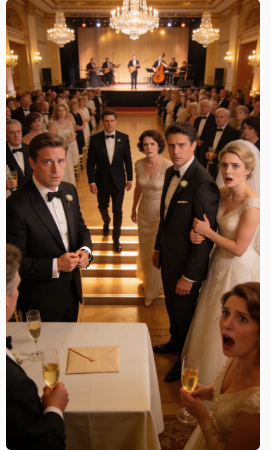
In the days surrounding these events, I kept a notebook with the date at the top of each page. I wrote down what I had seen myself, what someone had told me, and what I still needed to verify. Those categories became important. When a rumor traveled through the city, it often arrived dressed as a fact. I had once believed that a confident voice meant a person knew what they were talking about. The gala cured me of that illusion. I remembered Ximena's certainty as she held my mother's veil above her head. She had expected the room to accept her judgment because she was wealthy and beautifully dressed. The people who laughed had not asked whether she was right. They had merely decided that agreeing with her was safer than defending me.
My mother had a different measure of character. She used to tell me that the way a person behaved when nobody important was watching revealed more than a speech delivered beneath chandeliers. I thought about her words whenever I felt tempted to answer cruelty with cruelty. There were times I wanted to publish every ugly message, humiliate every person who had mocked me, and make the whole city choose a side. But anger was not a plan. I wanted the records corrected, the people responsible held accountable through a fair process, and the workers protected from the damage caused by their leaders. Those goals required patience I did not always possess.
At night, when the apartment was quiet, I sometimes opened the closet and touched the green satin. The fabric felt cool beneath my fingertips. I could picture my mother leaning over the sewing machine, her hair pinned back, one foot guiding the pedal while the other rested on the worn tile. She would have asked whether I had eaten dinner. She would have listened to my fears without telling me they were foolish. Then she would have reminded me that I had survived difficult things before. I missed that voice more than I missed the certainty that life would be simple.
I learned to accept help in small, unremarkable ways. Teresa brought groceries when I forgot to shop. Isabel reminded me to keep personal feelings out of formal statements. Javier called to tell me about a job opening when my contract was suspended. None of them could solve the entire problem. Each made it easier to face the next day. That was how I began to understand the difference between power and support. Power had allowed people to push my mother out of the story. Support helped me put her back where she belonged.
Marisol asked whether I hated her. The question surprised me because I had been so focused on what she knew that I had barely considered how she felt. I told her I did not know her well enough to hate her, and that her choices had hurt people whether she meant them to or not. She accepted that without protest. Isabel explained the difference between cooperating as a witness and receiving immunity; no one could promise Marisol an outcome. She listened, asked for time to consult her own lawyer, and then chose to give a statement. Watching her make that choice reminded me that the truth sometimes advances through people who are frightened and imperfect, not through heroes who have never made mistakes.
Afterward I walked through the library's history section and found a book about Monterrey's industrial neighborhoods. The photographs showed workshops, workers, families, and streets I recognized. Companies were often described as the achievement of a single founder. Yet every photograph contained dozens of hands. I wondered how many people like my mother had disappeared from official histories simply because nobody had thought to write their names down.
More chapters
You may like