Chapter 4 - THE CERTIFICATE OF A MAN WHO COULD SEE

Rachel began with the medical certificate.
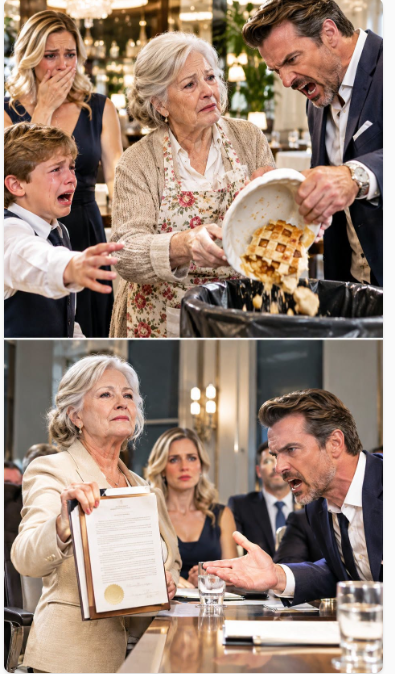
The document claimed that Daniel had been examined by Dr. Martin Bell and found unable to understand financial decisions. It recommended that Clara be appointed to manage his property and accounts. The date was six months earlier, when Daniel had been living at a rehabilitation center outside the city.
Rachel obtained the center's attendance records and the doctor's appointment log. Daniel had been in a supervised vision assessment at the exact time listed on the certificate. Dr. Bell had not been on duty.
The signature looked genuine at first glance, but the doctor's office confirmed that the form was not one of its templates. Dr. Bell denied signing it.
Rachel reported the suspected forgery to the appropriate authorities and asked the trust's bank to freeze any transaction relying on the document.
Daniel watched the city through the library windows. The world still seemed too bright after months of darkness. He wore his glasses because his eyes tired quickly, not because he needed them to hide. But he kept them on whenever Clara entered a room.
He wanted to know how much she had done and who had helped her.
Clara behaved as if nothing had changed. She continued ordering staff around, took calls in the conservatory, and told visitors that Daniel was emotionally unstable after his fall. When he asked about the ring, she said she had already explained that it was lost.
Rachel's investigators traced the replacement diamond to a jeweler in the city. The receipt showed that Clara had traded in a diamond ring and paid extra for the new one. The original ring had been sold to the jeweler for its stone value.
The jeweler had recorded the transaction under Clara's name.
Daniel asked for the date.
“It was two days before the first property application,” Rachel said.
He stared at the receipt. “She sold the ring I gave her to finance this?”
“We don't know what the money was used for yet.”
The jeweler confirmed that the original ring had been brought in by Clara. The hidden sapphire had been removed before the diamond was reset. The sapphire itself had not been included in the sale.
Rachel asked whether Daniel wanted to pursue recovery of the ring.
“No,” he said. “I want to know where the sapphire went.”
The jeweler provided a note on the receipt: customer requested removal of small blue stone; stone returned separately.
That meant Clara still had it, or someone else did.
Anna remembered seeing Clara wearing a thin chain beneath her blouse. A small blue object sometimes rested at the base of her throat. She had assumed it was a pendant.
When Daniel mentioned the detail, Anna nodded.
“She wears a necklace most days. The pendant is very small. I've never seen it clearly.”
Daniel understood. Clara had kept the sapphire, perhaps as a reminder of the promise she had broken.
That evening, he asked Clara whether she still had the stone.
She touched her throat instinctively.
“What stone?”
“The sapphire from my ring.”
Her hand dropped.
“I don't know where it is.”
“You're wearing it.”
Clara's face hardened. “You have no right to inspect my jewelry.”
“I gave it to you.”
“You gave me a ring. I sold it. I needed money.”
“For what?”
She said nothing.
Daniel looked at her, seeing every detail: the tightness around her mouth, the tiny pulse at her temple, the way her gaze flicked toward the hallway where Peter Voss had once stood.
“Was it for the house?” he asked.
Clara stepped closer. “You have no idea what it costs to take care of you.”
“I know what it costs to be lied to.”
She slapped the table with her palm. “You were blind! You needed me!”
Daniel did not move.
“I needed help. I did not need a thief.”
Clara stormed out.
Rachel called later with another discovery. Silver Coast Holdings had been registered only four months earlier. Its listed director was Peter Voss. Its registered address was a virtual office used by several shell companies.
The company had already received a deposit from a buyer who believed the Hale estate was being sold.
The buyer was not a stranger.
It was a developer who had once been Daniel's business partner.
Dr. Bell's original report was not the only document that had been altered. Rachel found a second version of Daniel's rehabilitation summary, this one with a paragraph stating that he was unable to understand complex financial information.
The clinic's electronic records showed that the paragraph had been added after the report was exported. The metadata identified a user account associated with an outside document service.
The service was registered to a company that had received payments from Silver Coast Holdings.
Rachel requested a preservation order for the electronic records. She also asked the clinic to notify any other institution that had received the altered report.
Daniel felt sick reading the paragraph. It was not simply a lie about his eyesight. It was an attempt to erase his ability to think, decide, and consent.
Anna found him sitting at the desk long after midnight.
“You should rest,” she said.
“I keep thinking about how easily they could have made people believe it.”
“People who didn't know you might have believed the paper.”
“That's what frightens me.”
Anna pulled out a chair. “Then the truth needs to be on paper too.”
He looked at her.
She suggested that he ask the clinic to issue a corrected report describing his recovery and current capabilities. Rachel agreed. The corrected report would not decide any legal question, but it would prevent the altered summary from circulating without challenge.
For Daniel, it was the first time he felt he was reclaiming not only his house, but his own history.
Daniel's first meeting with the ophthalmologist after the pool incident was difficult. The doctor examined his eyes and confirmed that the recovery remained stable, though the strain and stress had caused temporary headaches. He advised Daniel to avoid sudden changes in light and to continue using the protective lenses.
Daniel asked whether his vision could deteriorate again.
“It is possible,” the doctor said. “We will monitor it. But your current results are encouraging.”
The doctor also asked why Daniel had not informed his household that his sight had returned.
Daniel hesitated, then explained that he had been concerned about how Clara might respond. The doctor did not judge him. He simply documented that Daniel understood the treatment plan and was capable of making his own medical decisions.
That note became important when Rachel asked the clinic to correct the altered certificate.
On the drive home, Daniel watched the trees pass through the car window. He had spent so long pretending that the world remained dark that seeing it openly felt almost like a new form of exposure.
He told Rachel he wanted a second medical opinion from a specialist who had not been involved in his earlier treatment. She agreed to arrange it.
He also asked that all medical correspondence be sent directly to him, with copies to Rachel only when he authorized them.
It was a small decision, but it mattered. For two years, Clara had answered questions on his behalf. Daniel was taking that responsibility back.
The corrected medical report arrived three days later. It confirmed that Daniel had been alert, oriented, and capable of understanding the risks and benefits of his treatment throughout his rehabilitation. It also recorded that his visual recovery had been discussed with him directly.
Rachel sent the report to the title company, the lender, and the investigators. She asked that the altered certificate be marked as disputed and that no institution rely on it without independent verification.
Daniel read the report himself. It was the first official document in months that described him accurately.
He asked Rachel to arrange a meeting with the trust's independent adviser. He wanted to review every authorization he had signed before and after the accident. Some were valid, some were limited, and some had expired. He wanted a clear list of what each person could and could not do.
The review found that Clara had been authorized to pay routine household bills from a designated account. She had never been given authority to borrow against the estate or sell trust property.
Daniel asked for all future authorizations to require direct confirmation with him and Rachel.
It was not enough to catch one forged document. He wanted a system that made the next attempt harder.
That night, Daniel reviewed the authorization list with Rachel one more time. He asked her to explain every document in plain language, including the ones that seemed routine. He wanted to understand what authority he had delegated and when it expired.
Rachel did not rush him. They worked through the list line by line. Daniel canceled two outdated permissions, renewed one limited household authorization, and required a second independent confirmation for any transaction involving the estate.
When he signed the final page, he looked at the date and the witness's name.
“This is what signing should feel like,” he said. “Knowing exactly what I'm agreeing to.”
Rachel placed the document in the trust file.
“That's the standard from now on.”
Daniel closed the folder. For the first time since his accident, he felt that the paperwork around his life belonged to him again.
More chapters
You may like